
Volumes & Issues
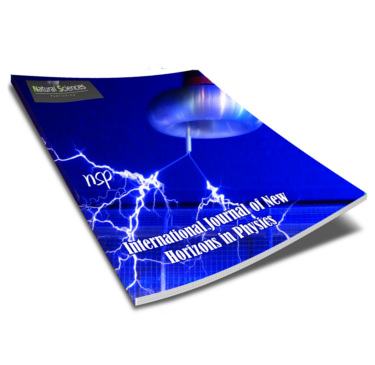
The International Journal of New Horizons in Physics (IJNHP) is an international, peer-reviewed scientific journal dedicated to publishing high-quality research in materials science, thin films, applied physics, and related interdisciplinary fields. The journal focuses on advancing scientific understanding of the relationships between the structure, properties, processing, and applications of materials. Its scope encompasses a broad range of topics, including thin films, metals, magnetism, ceramics, glasses, polymers, electrical materials, composite materials, optical fiber communications, radio-over-fiber technologies, nanostructured materials, nanocomposites, acoustical measurements and instrumentation, and the measurement of radiation and radioactivity.
The journal welcomes review articles, full-length research papers, and short communications presenting original research findings, innovative experimental techniques, and advances in materials characterization and measurement. Its aim is to promote interdisciplinary collaboration and the exchange of scientific knowledge among researchers in physics, materials science, engineering, and related disciplines. The International Journal of New Horizons in Physics provides a platform for sharing innovative discoveries, improving understanding of material properties and physical phenomena, and supporting the development of advanced materials and technologies with scientific and practical applications.
Information for authors
Aims and Scope:
The Journal of New Horizon in Physics is a peer-reviewed scientific journal dedicated to publishing high-quality research in materials science, thin films, applied physics, and related interdisciplinary fields. The journal provides a platform for the dissemination of original scientific findings, experimental techniques, and theoretical developments that improve understanding of the relationships between the structure, properties, processing, and applications of materials. It covers a broad range of materials and physical phenomena, including metals, magnetic materials, ceramics, glasses, polymers, electrical materials, composite materials, optical technologies, and nanostructured materials.
The journal welcomes review articles, full-length research papers, and short communications addressing topics including, but not limited to:
- Thin films, coatings, and surface science
- Materials science and applied physics
- Thermogravimetry and derivative thermogravimetry
- Differential thermal analysis and thermodilatometry
- Differential scanning calorimetry and thermal characterization of materials
- Measurement and detection of X-rays, gamma rays, alpha particles, beta particles, and other forms of radiation
- Nuclear instrumentation, radiation spectrometry, and dosimetry
- Magnetic materials, magnetism, and magnetic recording technologies
- Spintronics and dilute magnetic semiconductors
- Ceramics, glasses, polymers, and composite materials
- Electrical materials and electronic material properties
- Nanostructured materials, nanocomposites, and nanotechnology
- Optical fiber communications and radio-over-fiber technologies
- Optical materials and photonic applications
- Acoustical measurements, instrumentation, and characterization techniques
- Quantum physics, nuclear physics, and particle physics
- Experimental methods, measurement systems, and materials characterization
- Relationships between material structure, physical properties, and technological applications
The journal encourages contributions involving experimental investigations, theoretical analyses, materials characterization, measurement techniques, instrumentation development, and the application of advanced scientific methods to understand and improve material performance. Research on innovative materials, emerging physical phenomena, and new technologies in electronics, communications, radiation measurement, and applied physics is particularly welcome.
Through its interdisciplinary and international perspective, The Journal of New Horizon in Physics aims to promote scientific exchange and collaboration among researchers in physics, materials science, engineering, and related disciplines. Its objective is to advance fundamental knowledge, encourage innovative research methodologies, and support the development of materials and technologies with significant scientific and practical applications.
EDITOR-IN-CHIEF
Tivadar Lohner
Hungarian Academy of Sciences, Hungary
MANAGING EDITOR
E. R. Shaaban
Al-Azhar University, Assiut, Egypt
EDITORIAL BOARD
Abd-Majid, W. H. B.
University of Malaya, Kuala Lumpur, Malaysia
Abd-Rahman, S.
University of Malaya, Kuala Lumpur, Malaysia
Abousehly, A. M.
Al-Azhar University, Assiut, Egypt
Bahat, Aamir H.
Universiti Teknologi PETRONAS, Perak, Malaysia
El-Hagary, M.
Helwan University, Helwan, Egypt
El-Taher, A.
Qassim University, Saudi Arabia
Han, Junfeng
Institute of Materials Jean Rouxel, CNRS, France
Marquez, Emilio J.
Universidad de Cádiz, Cádiz, Spain
Mohamed, S. H.
Sohag University, Egypt
Saddeek, Y. B.
Al-Azhar University, Egypt
Sharma, P.
Jaypee University of Information Technology, India
Soga, T.
Nagoya Institute of Technology, Nagoya, Japan
Uosif, M. A.
Al-Azhar University, Assiut, Egypt
Yousef, E. S.
Al-Azhar University, Assiut, Egypt
ASSISTANT EDITOR
Hassan, A. M. A.
Al-Azhar University, Assiut, Egypt
International Journal of New Horizons in Physics is covered by the following services:
- Dimensions
- OpenAlex
- Google Scholar
- Semantic Scholar
- BASE
- ROAD
- Naver Academic
- Baidu Scholar
- JournalTOCs
- JournalGuide
- EBSCO
- Index Copernicus (ICI Journal Master List)
- Cosmos Impact Factor
- OpenCitations
- SCILIT
- OpenAIRE
Additionally, the journal is registered with Crossref for DOI registration and metadata deposits.
Submission Guidelines
Manuscripts submitted to International Journal of New Horizons in Physics (IJNPH) must be original contributions and must not be under consideration for publication elsewhere. The journal accepts original research articles, review articles, and short communications.
Language
All manuscripts must be written in English. Authors who are non-native English speakers are strongly encouraged to have their manuscripts reviewed by a native English speaker before submission.
Manuscript File Formats
Manuscripts may be submitted in PDF, DOC, DOCX, or LaTeX (.tex / .zip) format. Where applicable, supplementary files should be included in a single ZIP archive. The maximum file size is 50 MB.
Manuscript Templates
Authors are strongly encouraged to use the official IJNPH LaTeX template or Word template available from the journal website. Authors should always use the most current version of the appropriate template when preparing their manuscript.
Manuscript Structure
Original research articles should include the following sections in the indicated order: Title, Author(s) and Affiliation(s), Abstract, Keywords, Introduction, Methods, Results, Discussion, Conclusion, Acknowledgements (if applicable), Conflict of Interest statement, and References.
Title, Authors and Affiliations
The manuscript should begin with the title of the article, followed by the full names of all authors and their institutional affiliations.
Abstract
The abstract must contain between 50 and 3000 words. It must be self-contained and should concisely state the purpose of the study, the methods or approach used, the principal results, and the major conclusions. The abstract must not contain references, abbreviations, or mathematical formulae.
Keywords
Authors should provide 4 to 8 keywords that accurately reflect the content of the manuscript. Keywords should not already be included in the article title.
Introduction
The Introduction should clearly define the research problem, provide the necessary scientific background, and explain the motivation and relevance of the study. Relevant published research should be appropriately discussed and cited, and the contribution of the present work should be clearly identified.
Methods
The Methods section should provide a clear description of the mathematical, theoretical, computational, analytical, or experimental methods used in the study. Mathematical formulations, assumptions, models, algorithms, and procedures should be presented with sufficient detail to allow the work to be understood and, where applicable, reproduced.
Results
The Results section should clearly present the principal findings of the research. Mathematical results, analytical findings, computational results, numerical experiments, and other relevant outcomes should be presented systematically using appropriately numbered equations, figures, and tables.
Discussion
The Discussion should provide a critical interpretation of the results and explain their significance in relation to the research problem and existing literature. Authors should highlight the main scientific contributions of the study and discuss relevant implications, limitations, and comparisons with previous research where appropriate.
Conclusion
The Conclusion should summarize the principal findings and clearly state the main scientific contribution of the work. Where appropriate, authors may also indicate possible directions for future research.
Acknowledgements
An Acknowledgements section may be included where applicable.
Figures and Tables
All figures and tables must be numbered consecutively and provided with descriptive captions. Figures should be supplied at a minimum resolution of 300 dpi for photographs and 600 dpi for line drawings. All figures should be embedded within the manuscript file.
Mathematical Expressions
All mathematical expressions and equations should be numbered and typeset clearly. Standard mathematical notation should be used wherever possible. Non-standard symbols must be defined at their first occurrence.
Abbreviations and Symbols
All abbreviations, acronyms, and non-standard symbols must be defined when they are first introduced in the manuscript.
References
References must be numbered consecutively according to their first appearance in the text and listed in the same order at the end of the manuscript. In-text citations should appear as superscript numbers or in square brackets, for example [1] or [1,2,5–7].
Journal Article
Author(s) (Year). Article title. Journal Name, Volume(Issue), pp. Start–End. DOI.
Book
Author(s) (Year). Title of Book. Publisher, Place of publication.
Chapter in a Book
Author(s) (Year). Chapter title. In: Editor(s) (Eds.), Title of Book, pp. Start–End. Publisher.
Authors should provide DOIs wherever available. References to unpublished work, personal communications, or websites should be kept to a minimum.
Authorship
All listed authors must have made a genuine scientific contribution to the work. Ghost authorship and gift authorship are not permitted. The corresponding author is responsible for ensuring that all co-authors have approved the final manuscript and agreed to its submission.
Originality
Submission of a manuscript implies that the work has not been published previously, except where permitted for an abstract or conference paper, is not under consideration by another journal, and has been approved for submission by all authors. Plagiarism in any form is unacceptable and may result in immediate rejection.
Conflict of Interest
Authors must disclose any financial or personal relationships that could inappropriately influence the submitted work. If no conflicts exist, authors should include the following statement: "The authors declare no conflict of interest."
Ethical Approval
Where applicable, studies involving human participants or animals must include a statement confirming that appropriate ethical approval was obtained.
Data Availability
Authors are encouraged to make their research data available as supplementary material or through an appropriate open repository and to include a data availability statement in the manuscript where applicable.
Peer Review Process
This journal follows a double-blind peer-review process. Manuscripts are initially screened by the Editor-in-Chief for scope and overall quality. Manuscripts that pass the initial screening are sent to at least two independent expert reviewers.
Double-Blind Peer Review
In the double-blind peer-review process, the identities of both the authors and reviewers are concealed throughout the review process. This approach is intended to reduce potential bias and ensure that manuscripts are evaluated primarily on their scientific quality, originality, methodological rigor, significance, and contribution to the field.
Peer Review Criteria
Reviewers evaluate manuscripts according to their scientific quality, originality, relevance to the journal's scope, significance of the contribution, methodological rigor, clarity of presentation, and compliance with appropriate academic standards.
Reviewers
Manuscripts that pass the initial editorial screening are evaluated by at least two independent expert reviewers. Reviewers are selected according to the subject area and scientific expertise required to assess the manuscript.
Editorial Decisions
Following the peer-review process, authors may receive one of the following decisions: Accept, Minor Revision, Major Revision, or Reject.
Review Time
The typical review time is approximately 6–10 weeks. The actual processing time may vary depending on the availability of suitable reviewers and the complexity of the manuscript.
Revised Manuscripts
When submitting a revised manuscript, authors must provide a point-by-point response addressing all reviewer comments and explaining the changes made to the manuscript. Revised manuscripts that do not adequately respond to the reviewers' concerns may be returned without further review.
Publication Fee / APC
No Article Processing Charge (APC) is required. Publication in International Journal of New Horizons in Physics is free of charge for authors. Authors are not required to pay a publication fee for accepted manuscripts.
Copyright
Copyright and publishing rights remain with the authors unless otherwise agreed in writing. By submitting a manuscript, authors confirm that they have the right to submit and publish the work and that publication of the manuscript does not infringe the rights of any third party.
Submission System
All manuscripts must be submitted through the Cervantes editorial management system. Authors should submit their manuscripts through the IJNPH online submission system. Authors who are submitting for the first time should register for an account before submitting their manuscript.
Submission Requirements
Before submission, authors should ensure that the manuscript follows the journal's formatting requirements, contains all required sections, includes appropriate references, and has been approved for submission by all listed authors.
Contact Information
For enquiries regarding manuscript preparation or the submission process, please contact the editorial office at ijnph-journal@engineering-journals.org.
COPE Standards
This journal follows the ethical standards and Core Practices established by the Committee on Publication Ethics (COPE). Editors, authors, and reviewers are expected to comply with these principles, which promote transparency, integrity, and responsible conduct in scholarly publishing.
Zero Tolerance for Malpractice
The editorial board maintains a zero-tolerance policy toward publication malpractice. Submissions may be rejected if authors have committed serious ethical violations, including, but not limited to, plagiarism, duplicate submission, data fabrication, or other forms of academic misconduct.
Plagiarism Policy
The editorial board is participating in a growing community of Similarity Check System’s users in order to ensure that the content published is original and trustworthy. Similarity Check provides comprehensive manuscript screening to detect plagiarism and maintain a high standard of quality throughout the peer-review process.
Author Accountability and Verification
Authors are fully responsible for the accuracy, originality, and integrity of all submitted work, including any content edited or assisted by AI technologies. All manuscripts undergo an initial screening using specialized software to detect plagiarism and identify the undisclosed use of generative AI.
AI Guidelines for Authors (Simple Assistants)
Authors may use simple AI-assisted tools for limited purposes such as grammar correction, language translation, text formatting, or verification of statistical analyses. The use of these tools does not require disclosure, provided they do not generate original scientific content.
AI Guidelines for Authors (Generative AI)
Generative AI tools capable of producing original content, including manuscript text, literature reviews, tables, figures, or reference lists, must not be used to create the scientific content of a manuscript. Such tools may only be used for language editing, assistance with data analysis, or stimulus generation. If generative AI is used for these permitted purposes, authors must include a Disclosure of the Use of AI section describing the tools employed and their specific role in preparing the manuscript.
AI Guidelines for Reviewers and Editors
Editors and reviewers may use simple AI-assisted tools to improve the language of their reports or verify statistical analyses without disclosure. However, the use of generative AI to produce peer-review reports, editorial decisions, or manuscript evaluations is strictly prohibited to preserve the integrity and confidentiality of the review process.
Blind Peer Review
This journal follows a blind peer-review process in which submitted manuscripts are evaluated by independent experts without revealing the identity of the authors. This approach helps reduce bias and ensures that each manuscript is assessed solely on its academic quality, methodology, originality, and contribution to the field.
Open Access Statement
This is an open access journal that provides free, immediate, and unrestricted online access to all its published content for readers around the world.
Archiving
Engineering Journals archives the contents of this journal in Portico, a trusted digital preservation service that ensures the long-term accessibility and preservation of scholarly books, journals, and collections.
Published by: Engineering Journals