

Volumes & Issues
Applied Mathematics and Nonlinear Sciences has been classified in the 3rd place with the result of 2.7 JCI metrics in Mathematics, Applied Category Ranking released by Clarivate Analytics in the Journal Citation Report 2021!
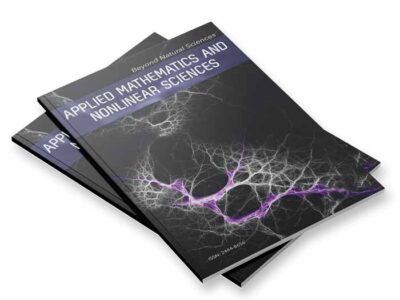
Applied Mathematics and Nonlinear Sciences (AMNS) provides a forum for the rapid publication of original research in this field. The journal's scope encompasses all nonlinear dynamic phenomena associated with mechanical, structural, civil, aeronautical, oceanography, electrical, and control systems.
We particularly welcome papers in the fields of celestial mechanics, mathematical physics, high-energy astrophysics, astrophysical studies of the interstellar medium, planetary and space science.
Review articles and original contributions are based on analytical, computational, and experimental methods.
Applied Mathematics and Nonlinear Sciences (AMNS) is dedicated to the publication of the highest quality short papers, regular papers, and expository papers. AMNS considers only original and timely contributions containing new results in various fields of Applied Mathematics and Nonlinear Sciences. Manuscripts may discuss fundamental or applied issues, and should offer clear evidence of novelty and significance. Papers devoted, for the most part, to pure mathematical and computational issues, with limited direct connection to current trends of nonlinear sciences research, are generally not suitable for publication in AMNS. Similarly, small, technical advances, or papers concerned only with mathematical applications or issues of basic science may not be considered favourably.
AMNS publishes in a continuous volume open model - Issue 1 is opened in January and closed at the end of December.
AMNS accepts papers through single peer blind external review by professional colleagues in the relevant fields. Unless clearly below the standard required by the journal, submitted articles will be sent to referees. They will generally be reviewed by at least two experts with the aim of reaching a decision as soon as possible. Where possible, the final decision is made on the basis that the referees are in accordance with one another. When there is a strong disagreement between referees, advice is sought from a member of the journal's Editorial Board.
Information for authors
The journal examines such topics as perturbation and computational methods, symbolic manipulation, dynamic stability, local and global methods, bifurcations, chaos, and deterministic and random vibrations. The journal also investigates Lie groups, multibody dynamics, robotics, fluid-solid interactions, system modelling and identification, friction and damping models, signal analysis, and measurement techniques.
The scope of this journal covers but is not limited to:
- Numerical analysis
- Numerical algebra
- Numerical methods for ODE, PDE, FDE
- Computational geometry
- Computational fluid dynamics
- Computational optimisation
- Computational probability
- Statistical computation and simulation
- Computational intelligence
- Computational complexity
- Theoretical computer science
- Computational physics
- Computational biology
- Dynamical systems
- Mathematical analysis
- Topology and its applications
- Nonlinear methods and its applications
- Related applications in physics, engineering, chemistry, economics and the social sciences
Zulqurnain Sabir, Lebanese American University, Beirut, Lebanon
Editorial Board
†Valentín Afraimovich, Universidad Autónoma San Luis de Potosí, MEXICO
Praveen Agarwal, Anand International College of Engineering, INDIA
Marat Ahkmet, Middle East Technical University, TURKEY
Ahmed E.S. Alsaedi, King Abdulaziz University, SAUDI ARABIA
Shigeru Arimoto, Tsuyama National College of Technology, JAPAN
Abdon Atangana, University of the Free State, SOUTH AFRICA
Haci Mehmet Baskonus, Harran University, Turkey
Jinde Cao, Southeast University, CHINA
Dongliang Hu, Hohai University, CHINA
Elbaz I. Abouelmagd, Research Institute of Astronomy and Geophysics (NRIAG) of Cairo, EGIPT
Peter Kloeden, Goethe-Universität Frankfurt am Main, GERMANY
Jürgen Kurths, Humboldt-Universität zu Berlin, GERMANY
Patrice Le Calvez, Institut de Mathematiques de Jussieu, Université Pierre et Marie Curie, FRANCE
Hongkui Li, Shandong University of Technology, CHINA
Chao Ma, Hubei University of Arts and Sciences, CHINA
Kenneth R. Meyer, University of Cincinnati, USA
Michal Misiurewicz, Indiana University-Purdue University Indianapolis, USA
Vladimir Nekorkin, Russian Academy of Sciences, RUSSIA
Ernesto Pérez-Chavela, Instituto Tecnológico de México, MEXICO
Enrique Pujals, Instituto Nacional de Matemática Pura e Aplicada, IMPA, BRAZIL
Mohammad M. Rashidi, Tongji University, CHINA
†Alexander N. Sharkovsky, National Academy of Sciences of Ukraine, UKRAINE
†José A. Tenreiro-Machado, Polytechnic Institute of Porto, PORTUGAL
Muhammad Umar, Hazara University, PAKISTAN
Ezio Venturino, Università Degli Studi di Torino, ITALY
Marcelo Viana, Instituto Nacional de Matemática Pura e Aplicada, IMPA, BRAZIL
Paul G. Mezey, Memorial University of Newfoundland, St. John's, CANADA
Bruce A. Wade, University of Louisiana at Lafayette, Lafayette, Louisiana, USA
- Baidu Scholar
- Cabell's Journalytics
- CNKI Scholar (China National Knowledge Infrastructure)
- Dimensions
- EBSCO
- ExLibris
- Google Scholar
- J-Gate
- Jisc - Open Policy Finder
- JournalTOCs
- KESLI-NDSL (Korean National Discovery for Science Leaders)
- MathSciNet
- MIAR
- MyScienceWork
- Naver Academic
- Naviga (Softweco)
- ProQuest
- ReadCube
- Reaxys
- ScienceON/AccessON
- SCILIT
- Scite_
- Semantic Scholar
- TDNet
- Ulrich's Periodicals Directory/ulrichsweb
- WanFang Data
- WorldCat (OCLC)
- X-MOL
- H-Index 27
COPE Standards
This journal follows the ethical standards and Core Practices established by the Committee on Publication Ethics (COPE). Editors, authors, and reviewers are expected to comply with these principles, which promote transparency, integrity, and responsible conduct in scholarly publishing.
Zero Tolerance for Malpractice
The editorial board maintains a zero-tolerance policy toward publication malpractice. Submissions may be rejected if authors have committed serious ethical violations, including, but not limited to, plagiarism, duplicate submission, data fabrication, or other forms of academic misconduct.
Plagiarism Policy
The editorial board is participating in a growing community of Similarity Check System’s users in order to ensure that the content published is original and trustworthy. Similarity Check provides comprehensive manuscript screening to detect plagiarism and maintain a high standard of quality throughout the peer-review process.
Author Accountability and Verification
Authors are fully responsible for the accuracy, originality, and integrity of all submitted work, including any content edited or assisted by AI technologies. All manuscripts undergo an initial screening using specialized software to detect plagiarism and identify the undisclosed use of generative AI.
AI Guidelines for Authors (Simple Assistants)
Authors may use simple AI-assisted tools for limited purposes such as grammar correction, language translation, text formatting, or verification of statistical analyses. The use of these tools does not require disclosure, provided they do not generate original scientific content.
AI Guidelines for Authors (Generative AI)
Generative AI tools capable of producing original content, including manuscript text, literature reviews, tables, figures, or reference lists, must not be used to create the scientific content of a manuscript. Such tools may only be used for language editing, assistance with data analysis, or stimulus generation. If generative AI is used for these permitted purposes, authors must include a Disclosure of the Use of AI section describing the tools employed and their specific role in preparing the manuscript.
AI Guidelines for Reviewers and Editors
Editors and reviewers may use simple AI-assisted tools to improve the language of their reports or verify statistical analyses without disclosure. However, the use of generative AI to produce peer-review reports, editorial decisions, or manuscript evaluations is strictly prohibited to preserve the integrity and confidentiality of the review process.
Blind Peer Review
This journal follows a blind peer-review process in which submitted manuscripts are evaluated by independent experts without revealing the identity of the authors. This approach helps reduce bias and ensures that each manuscript is assessed solely on its academic quality, methodology, originality, and contribution to the field.
Open Access Statement
This is an open access journal that provides free, immediate, and unrestricted online access to all its published content for readers around the world.
Archiving
Engineering Journals archives the contents of this journal in Portico, a trusted digital preservation service that ensures the long-term accessibility and preservation of scholarly books, journals, and collections.